Friday, December 24, 2010

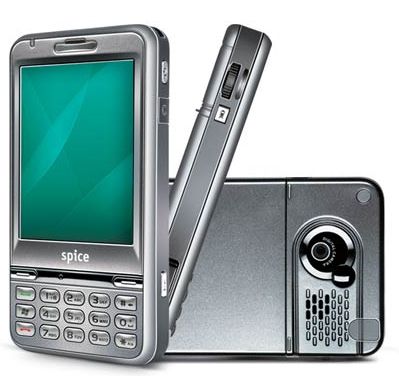
Spice Mobiles presents India’s First Dual GSM+GSM PDA Handsets

spice-d1100-pda-phone Spice Mobiles presents India’s First Dual GSM+GSM PDA Handsets
Spice Mobiles Ltd., a part of Spice Corp, previously known as MCorp Global, made its debut in the Indian Telecom Market two years ago. Starting with handsets targeting the entry-level segment, Spice Mobiles Ltd has now opened a new chapter in the history of Indian mobile telephony with the launch of the first ever DUAL MODE PHONES. The new Spice D-1100 Dual SIM (GSM+GSM) PDA mobile phone is available at the rate of Rs. 16,599( including taxes) and it comes with a standard “1 year Warranty.”
The Spice D-1100 “Candy bar style” mobile phone enables users to handle two distinct phone numbers at the same time, which will be extremely handy for using official numbers as well as personal numbers simultaneously. Powered by Windows mobile 6.0, the handset features a 256K TFT color display and a 2.0 Mega pixel Digital Camera with 6x Zoom capability. It also sports various other features such as video recording and playback, integrated MP3 media player, GPRS and a Bluetooth connection too. The Dual SIM enabled Spice D-1100 is available in Grey color, and it comes with Li-ion 1350 mAh Standard Battery which offers of full-charge talk time upto 3 to 8 hrs, and 130 hrs of standby time.
The press release from the company states that “ Spice Mobiles Limited is proud to present India’s First Dual SIM (GSM+GSM) PDA handset D-1100. Nothing can beat the double impact of D-1100. Double your efficiency with its active dual modes simultaneously. And that is not all, with a Windows 6.0 operating system, Internet Explorer, Bluetooth and 2 Mega Pixel Camera, you get the best of two worlds”.
The Dual SIM GSM+GSM Windows Mobile 6.0 also offers special In-built Value Added Services, including the following:
Convenient commercial service through “NGpay” –the leading mobile commerce services company in India.

One Touch News from “Thomson Reuters”
– the Global source of information for both businesses and professionals.
Outlook E-Mail – Push mail and MSN with Office Applications, and
SpiceGang – A customized “WAP portal designed to jazz up your mood and mobile. Download latest music, wallpapers and other content only from SpiceGang.”

New Clam Shell Mobiles from BlackBerry – I Love Flip Mobiles

I really love to own a BlackBerry. There are many features in BlackBerry which are not available in other mobiles. I was very happy when I heard that BlackBerry is releasing some flip model mobile phones. Research in motion RIM has announced the first ever one of its kind flip version of Blackberry its called BlackBerry pearl flip 8220 along with Bold as the another variant considered to be the fastest Blackberry till date. It’s going to be from a US telecom carrier with 3G supporting features and also available in Japan and Korea.

The Flip variant is based on quad band and used EDGE for enhanced data transfers with a couple of displays with high resolution. The internal screen which large enough is meant for viewing web pages, videos and messages etc, while the outer screen is for to have glimpse of the messages received and calls so on eliminating the need to open the device.
The Flip version of Pearl has improved HTML based browser to surf through and can view web pages in column and page views in desktop style or mobile kind of experience. The notable features include the sure type technology; it has an in built Wi-Fi 802.11 B/G kind and does support UMA. It is shipped with DataViz Documents and Go software suite to view, handle and editing Microsoft Word, Excel and PowerPoint files types.

In addition it has a 2 mega pixel camera along with a flash, zoom and video capture features. A memory card slot meant for external micro SD card. Obviously includes BlackBerry Maps and works using RTSP to watch videos online. From the sources of AT&T press release the other version Bold is supposed to have a 480X320 screen resolution as is black and chrome in appearance. The display is Half VGA color and the keyboard is QWERTY full version. The Bold has in built GPS and Wi-Fi support, 624 MHz mobile processor makes it double efficient and faster than its previous ones with 1GB memory storage and the browsing would be only in desktop style.

Chinese mobiles to continue in India

The Government of India had recently issued an order according to which you could not use a Chinese made mobile phone (Chinese Mobiles) handset in India as the cellphones either did not use a valid IMEI code or worst still, did not have one at all!

Cellular Operators Association of India (COAI) has developed a software that will provide a unique IMEI number identity to those handsets that don't have it. The Department of Telecom (DoT) has given a go-ahead to the COAI-Mobile Standard Alliance collaboration to carry out a project through which an IMEI number will be added to the handsets through a software.

To get this project kick-started, there will be around 1,600 retail outlets set up across the country. These will be introduced in a phased manner, finer details of which are currently unavailable.

Ten of such service centers that will offer to add an IMEI numbers to deficient Chinese phones have already commenced in Delhi on Monday.

International Mobile Equipment Identity, or IMEI, is a unique 15-digit code that identifies a mobile. It is unique to each GSM handset and in most countries, a legal prerequisite for handsets to operate. There are currently over 16-million China-made mobile phones in the country.

The Mobile Phone Journey: From Past to Present Posted on April 14th, 2008 | Filed under: Features History of Mobile phones If you have gotten used to your sleek and compact phone, imagine our grandfathers carrying a huge box which they called as a ‘Cell phone’, which weighed approximately 4 times more as compared to the newer sleek phones. Mobile phones have seen a vast amount of changes in the last few decades, here’s a quick recap of the mobile phones from the birth stages. The first mobile phone well known as 1G (First Generation) phone was launched in 1983 by the Motorola Company. The phones used analog technology and they faced a huge problem in regards to clarity and constant noise interference. The 1G phones were quite heavy and needed to be permanently installed on automobiles due to their size and weight. The main utility that the 1G phones provided were communicating traffic information. This is the era of mobiles where only one to one calling was possible. Then the mobile phones drove into the period of 1990’s and came the era of second generation or 2G handsets which brought in a package of changes in technology. The 2G phone proudly featured the digital technology and welcomed the smaller units and batteries and it meant as per its name Mobile. The phones introduced the calling plus messaging features. While we were busy preparing for the funeral of 2G phones, the 2.5G Phones came in to scene with full fledged talk, messaging and picture messaging features, the phones lost a good amount of weight during their long journey. The 2.5 G features were making a foundation to the path of 3G with calling, text messaging, picture messaging and GPRS packet data facilities. And the current age of 3G phones surprised the world with a huge list of features like video calling, Wi-Fi connectivity, mobile TV, video streaming and endless amount of excellent features. The phones became an ‘All in One’ compact system and molded into a computer phone and eliminated the need of a computer for some of the users. The Mobile phones have traveled right from the old green or blue background screens to the latest color widescreens which can be controlled by a mere touch on the screen. While we are getting ready to welcome the 4G generation of mobiles, the mobile phones have already started displaying mobile TV’S proudly and they even guide one through a road with the GPS maps and real time traffic information. Mobile phones have transformed themselves neatly from a luxury item to a necessity. The phones have even been encrusted with diamonds, precious gems, gold, etc and thus making it a fashion accessory rather than a simple gadget. Mobile phones have not yet stopped with their journey. In today’s date when they have become a necessity, there’s still a long way to travel and there are a vast amount of technological improvements expected in the future. You can skip to the end and leave a response. Pinging is currently not allowed. Related Headlines: * Cassandra’s Journey: Legacy of Nostradamus HD for Apple iPhone * HTC crosses over to China starting with four innovative handsets * Barcode train tickets now available on your mobile phones * Gameloft brings out its award winning mobile game, The Oregon Trail * Google Sky Map now lets users time travel « Jabra M5390 Bluetooth Headset: Connect to Multiple Devices Nokia 6212 Classic will make pairing easy with a tap » Leave a Reply Name (required) Mail (will not be published) (required) Website Anti-spam word: (Required)* To prove you're a person (not a spam script), type the security word shown in the picture. Anti-Spam Image

If you have gotten used to your sleek and compact phone, imagine our grandfathers carrying a huge box which they called as a ‘Cell phone’, which weighed approximately 4 times more as compared to the newer sleek phones. Mobile phones have seen a vast amount of changes in the last few decades, here’s a quick recap of the mobile phones from the birth stages.
The first mobile phone well known as 1G (First Generation) phone was launched in 1983 by the Motorola Company. The phones used analog technology and they faced a huge problem in regards to clarity and constant noise interference. The 1G phones were quite heavy and needed to be permanently installed on automobiles due to their size and weight. The main utility that the 1G phones provided were communicating traffic information. This is the era of mobiles where only one to one calling was possible.
Then the mobile phones drove into the period of 1990’s and came the era of second generation or 2G handsets which brought in a package of changes in technology. The 2G phone proudly featured the digital technology and welcomed the smaller units and batteries and it meant as per its name Mobile. The phones introduced the calling plus messaging features.
While we were busy preparing for the funeral of 2G phones, the 2.5G Phones came in to scene with full fledged talk, messaging and picture messaging features, the phones lost a good amount of weight during their long journey. The 2.5 G features were making a foundation to the path of 3G with calling, text messaging, picture messaging and GPRS packet data facilities.
And the current age of 3G phones surprised the world with a huge list of features like video calling, Wi-Fi connectivity, mobile TV, video streaming and endless amount of excellent features. The phones became an ‘All in One’ compact system and molded into a computer phone and eliminated the need of a computer for some of the users.
The Mobile phones have traveled right from the old green or blue background screens to the latest color widescreens which can be controlled by a mere touch on the screen. While we are getting ready to welcome the 4G generation of mobiles, the mobile phones have already started displaying mobile TV’S proudly and they even guide one through a road with the GPS maps and real time traffic information.
Mobile phones have transformed themselves neatly from a luxury item to a necessity. The phones have even been encrusted with diamonds, precious gems, gold, etc and thus making it a fashion accessory rather than a simple gadget. Mobile phones have not yet stopped with their journey. In today’s date when they have become a necessity, there’s still a long way to travel and there are a vast amount of technological improvements expected in the future.